
CALIME / Omega and fats
EPA and DHA: how to compare their amounts per serving?
Check how much EPA and DHA are in the quantity of product described on the label, then compare the total or calculate the amount per capsule or millilitre.

contact@calime.app · +48 533 223 143
EPA and DHA are two specific omega-3 fatty acids
Omega-3 is the name of a family of fatty acids. EPA is short for eicosapentaenoic acid, and DHA for docosahexaenoic acid. These are two different ingredients that may be listed separately on an oil label. The total weight of a capsule alone, or a general statement such as “omega-3”, does not tell you how much EPA and DHA it contains.
EPA and DHA contribute to the normal function of the heart. The authorised claim for this effect states that a daily intake of 250 mg EPA and DHA is required before information about the beneficial effect can be given. This is not an individual recommendation to increase the amount of product, nor a promise to treat heart disease.
First, establish what quantity of product the figures refer to
A serving is a specified quantity of a product described on the label, for example three capsules or five millilitres of liquid. It is not always the same as one item. A millilitre, written as ml, is a unit of volume for liquids. A milligram, written as mg, is a unit of the mass of an ingredient.
The Polish label for Omega 3 concentrate gives 540 mg EPA and 360 mg DHA in three capsules. Adding these amounts gives a total of 900 mg EPA and DHA: 540 mg + 360 mg = 900 mg. The Polish label for Nordic Pure Omega CETO3 gives 322 mg EPA and DHA per 5 ml. “Per 322 mg” means 322 mg of each of these acids, so the total is 322 mg + 322 mg = 644 mg in 5 ml.
The table below compares the amounts of EPA and DHA for the servings described on the labels and for one capsule or one millilitre. Calculations per item and per ml show a different perspective from the stated serving - they do not change the quantity of product specified by the manufacturer.
| Product | Quantity of product described on the label | Total EPA and DHA in this quantity | Total EPA and DHA per capsule or 1 ml |
|---|---|---|---|
| Omega 3 concentrate | 3 capsules | 900 mg | 300 mg per capsule |
| Nordic Pure Omega CETO3 | 5 ml | 644 mg | 128,8 mg per ml |
In the first row, we divide 900 mg by three capsules: 900 mg ÷ 3 = 300 mg EPA and DHA in total per capsule. In the second row, we divide 644 mg by 5 ml: 644 mg ÷ 5 = 128,8 mg EPA and DHA in total per ml. The ingredients can also be checked separately: one capsule of Omega 3 concentrate contains 180 mg EPA and 120 mg DHA; each ml of Nordic contains 64,4 mg EPA and 64,4 mg DHA.
Comparing 900 mg with 322 mg would be misleading: the first figure is the total of EPA and DHA in three capsules, while the second refers only to EPA or only to DHA in 5 ml of Nordic. To compare totals, you need to add EPA and DHA for each product. It is useful to keep both the figures for the original quantity of product and the calculated result. This makes clear what the figures refer to, without guessing or changing the quantity of product.
The weight of the oil is not the same as the total of EPA and DHA
Three capsules of Omega 3 concentrate contain 1800 mg of fish oil concentrate. Of this amount, 900 mg is made up of EPA and DHA. In turn, 5 ml of Nordic contains 4600 mg of herring oil, which lists, among other components, EPA, DHA and cetoleic acid. The weight of the whole oil should not be added to the amounts of the listed ingredients: this would mean counting part of the same oil twice.
Cetoleic acid is a separate fatty acid, not another name for EPA or DHA. In a serving of Nordic, it amounts to 782 mg. This entry adds to the description of the oil’s composition, but is not included in the total of EPA and DHA.
What the claim says, and what the label does not calculate
Evidence relating to the normal function of the heart forms the basis for the relevant nutrition claim. Clinical studies examining other aims relate to specific forms, amounts and groups of people studied. Results from studies of medicinal preparations cannot automatically be applied to every supplement capsule. The composition table alone cannot predict an individual effect.
However, products can be compared in terms of specific features: liquid or capsule form, the source of the oil, the ratio of EPA to DHA, and whether cetoleic acid is listed separately. Omega 3 concentrate comes in capsules containing anchovy and salmon oil, while Nordic Pure Omega CETO3 is a liquid herring oil. If you take medicines, are pregnant or have a significant medical condition, it is worth discussing the full composition and how to use the product with a specialist.
CaliVita® product comparison
The comparison describes the products’ composition and form. It does not determine individual requirements or provide supplementation recommendations.
| Product | Composition and serving | What makes it distinctive | When this option may be suitable |
|---|---|---|---|
| Omega 3 Concentrate | 100 capsules 3 capsules contain Fish oil concentrate containing: 1800 mg EPA (eicosapentaenoic acid): 540 mg DHA (docosahexaenoic acid): 360 mg | Fish oil concentrate from anchovy and salmon in capsules. The label gives the composition of three capsules together. | May suit someone who prefers capsules and is looking for a profile in which the stated amount of EPA is higher than DHA. Three capsules contain a total of 900 mg EPA and DHA, or 300 mg per capsule. |
| Nordic Pure Omega CETO3 | 1 serving (5 ml) contains (confirmed on the Polish PDF label) Ocean herring oil CETO3® containing: 4600 mg Cetoleic acid: 782 mg Eicosapentaenoic acid (EPA): 322 mg Docosahexaenoic acid (DHA): 322 mg | Liquid herring oil with EPA, DHA and separately listed cetoleic acid. The label describes 5 ml of liquid, not one capsule. | May suit someone interested in a liquid form, equal stated amounts of EPA and DHA, and separately listed cetoleic acid. |
Sources and further reading
- EFSA 2010 - EPA and DHA and the maintenance of normal heart function
- Register of authorised health claims - Regulation (EU) No 432/2012
- NIH ODS - omega-3 fatty acids
- CaliVita® - Omega 3 concentrate, product information and label (Polish market)
- CaliVita® - Nordic Pure Omega CETO3 250 ml, product information and label (Polish market)
Products related to this article
See retail prices and potential membership savings, then check the distributor basket before you decide.
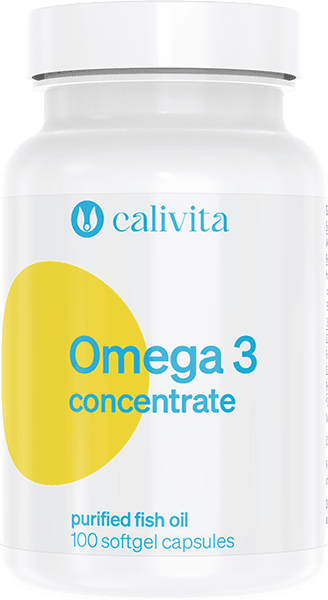 Omega 3 ConcentrateRetail price€37.90Join CaliVita Cluband Save 9.40 EURAfter meeting CaliVita membership terms. Confirm the final price with the distributor.Details and basket →
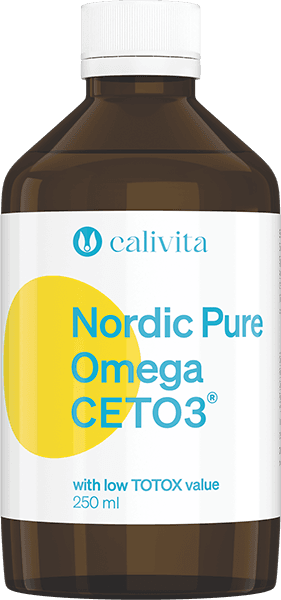 Nordic Pure Omega CETO3Retail price€61.05Join CaliVita Cluband Save 15.15 EURAfter meeting CaliVita membership terms. Confirm the final price with the distributor.Details and basket →
This text represents only the experiences and/or opinions of the named author(s). Your experiences may differ.
Calime is owned, operated and managed by Michał Zarzycki, an independent CaliVita® Partner, who is solely responsible for each item of content and the entire website. CaliVita® and its national offices are not responsible for this website. Products identified as food supplements have that status; only appropriate health claims apply, not medical claims. Information, statements and opinions about supplements do not replace medical advice. Cosmetics, devices and materials are not food supplements.
This post is for information only. We make every effort to ensure it is as accurate as possible, but it is not medical advice and does not replace a medical consultation. If in doubt, contact an appropriate doctor. A food supplement is not a substitute for a varied diet and a healthy lifestyle.